Have you missed me? Trick question; I know you’ve missed me. Frankly, the main reason I haven’t been writing is laziness. I make no bones about it. The second reason is that I got hit by a car in April and broke four bones in my hand, and the third is that I had a very outdoorsy summer (after my hand healed), and the fourth is that I have a girlfriend to occupy my free time now, and the fifth is that the world has gone insane.
I mean, what am I even supposed to write about? What am I supposed to say? How am I supposed to point to one stupid thing to focus on — like the fact that Solar Roadways’ website suddenly doesn’t work because haha fuck them — when the real-life things that are happening are so much stupider? The world is an Onion headline and I can’t even pick a place to start.
So let’s start with some morons in a boat!
No politics here (though I’m sure if you squint you can find a way to accuse me of racism or sexism or something), just me and my lifetime of sailing experience, including nearly five years living on a boat, against these two idiots.
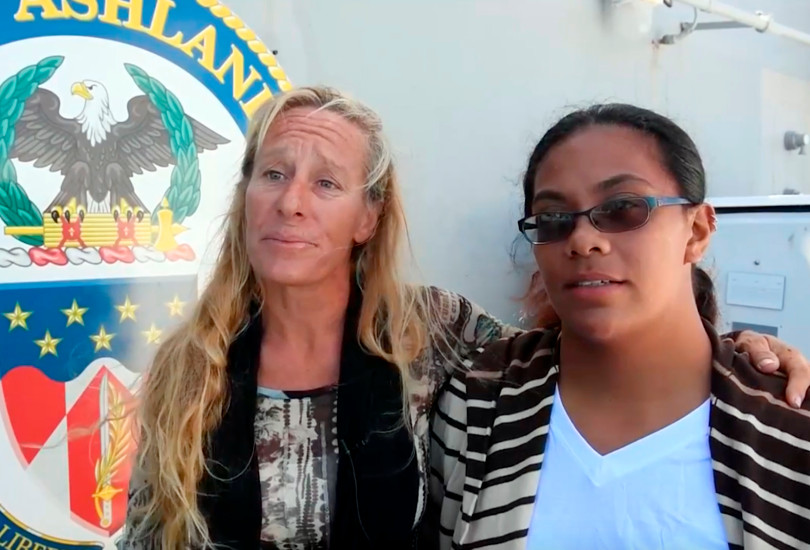
Those two are named Jennifer Appel and Tasha Fuiava, and their story has been everywhere recently. Here’s their account of what happened, in brief:
They set off from Hawaii in May of this year, bound for Tahiti. They were caught in a storm that both ruined their engine and rendered their mast and sails useless. They were unable to contact help. They drifted for five months, living off of dry food and a handheld watermaker (takes the salt out of seawater so you can drink it) until they were rescued by a fishing boat and, eventually, the Navy.
Now here’s how much of their story makes sense:
They left Hawaii in May. They were rescued five months later by the Navy.
That’s it. That’s the only portion of their story that has even a shred of credibility to it. Now, I’m not going to speculate as to their motives yet, but I will point out that the world of open-water sailing is an obscure one to most people. I am one of a small minority to have spent a lot of time sailing on the open ocean, out of sight of land for months at a time. So I don’t blame journalists for not catching these things at first sight. But that’s why I’m here to explain them to you.
1. Food
These women were able to survive because they had vast stores of dry food on board —mainly oatmeal, pasta, and rice. I’m going to assume that they’re giving an incomplete picture of what they ate, because if that’s all they had they would have died. No question. The human body cannot live on carbs alone for five months, nor can the two dogs they had on board with them. Even ignoring the essential nutrients like vitamins, there are eight amino acids from protein and fats (11 for dogs) that the body cannot synthesize, without which you will die in a couple of months. Unfortunately, the Nazis performed just such an experiment, so we know this to be true.
So I’ll assume they also had some Centrum Silver and canned sardines on board that they didn’t talk about that kept them from dying. What I’m more concerned about is how they didn’t just starve to death.
See, most news outlets who’ve reported on this story say they had a year’s worth of food on board. The Independent quotes Appel as follows:
“They [experienced sailors in Hawaii] said pack every square inch of your boat with food, and if you think you need a month, pack six months, because you have no idea what could possibly happen out there.”
Not to put too fine a point on it, but that is utter horseshit. In my time living on boats, I undertook literally hundreds of overnight passages. Probably a dozen of them took more than a few days, and six took more than a week. One took two weeks, one took three. And at no point in those five years did anyone ever advise us to carry six times as much food as we might need, let alone 12. You see, the passage from Hawaii to Tahiti is 2600 miles.
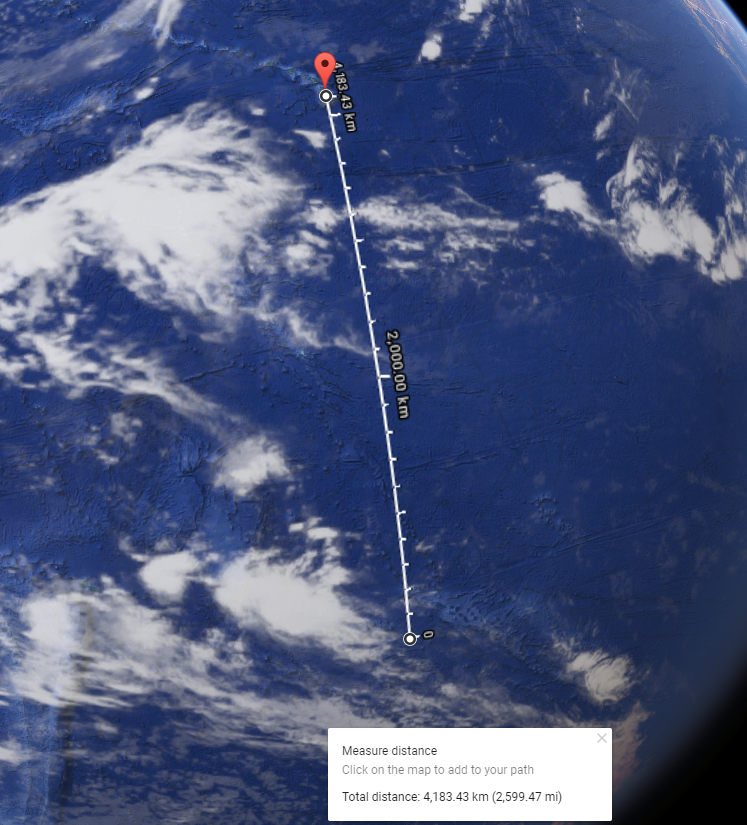
In a boat like theirs (we’ll get to the boat), 120 miles in 24 hours is a very reasonable pace to expect. That’s a passage of 21 days. Three weeks. And you packed food for a year? That doesn’t make sense. An inexperienced sailor wouldn’t have thought to do that, and an experienced one would have known it wasn’t necessary.
And then there’s the matter of carrying that much food. Luckily, Costco sells a year’s worth of food, so we know what it looks like.

That’s a year’s worth of food, for four people, at 1300 calories per person. For two people, it’s 2600 calories a day, which is a very reasonable amount to eat when you’re out at sea, moving around, pumping a hand desalinator all day long. It comes on a pallet and weighs 1800 pounds, and is an absolutely ludicrous amount of food to bring on board a 50-foot boat. These people were vastly overprepared in the food department.
But weirdly, they claim to have gone through 90% of their food by the time they were rescued. So did they bring six months’ supply or a year? And how did they go through it so quickly?
2. Water
You can’t drink seawater. More specifically, you can, but it’ll kill you, and pretty quickly at that. Appel claims that they made water using a desalinator, presumably a handheld one like this.
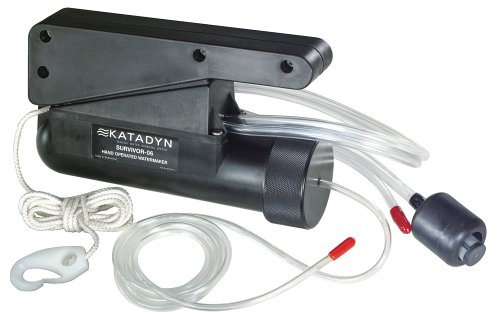
That one will put out about a quart an hour. So mow much do they need?
Let’s assume that they’re each eating 1500 calories a day, and the two dogs are eating that between them (again, ignoring the fact that dogs can’t survive on a carb-only diet). That’s 4500 calories a day of oatmeal, pasta, and rice. They didn’t tell us how much of each they ate, but I did some poking around and found that 1000 calories of rice needs about three cups of water to prepare, while 1000 calories of oatmeal needs about 12. Pasta is somewhere in the middle. Let’s average it out to about 6 cups of water (1.5 quarts) per 1000 calories of food.
So for 4500 calories a day, they need 6.75 quarts of water. Now, how about drinking water? All the info I found said that humans need around two quarts a day, though they can survive on one quart a day if it’s absolutely necessary and they’re not exposed to too much sun. At two quarts a day, between them and the dogs, that’s another six quarts a day for a total of 12.75 quarts. That means between them, they’re operating the watermaker literally all day long. Granted, the boat had water tanks, but I don’t know how big they were. And if you’re outside in the sun, trying to fix the boat, working up a sweat, etc., those needs will go up. Surviving would be a struggle.
[EDIT 11/1/17: there are a ton of other desalinator options on the market that would meet their needs more easily, though they didn’t specify what kind they used. It also appears they have a wind generator in some of the photos, which might have made enough power to run an electric one, depending on conditions. Safe to assume water wasn’t an issue.]
Which brings me to my next point:
3. Their Condition
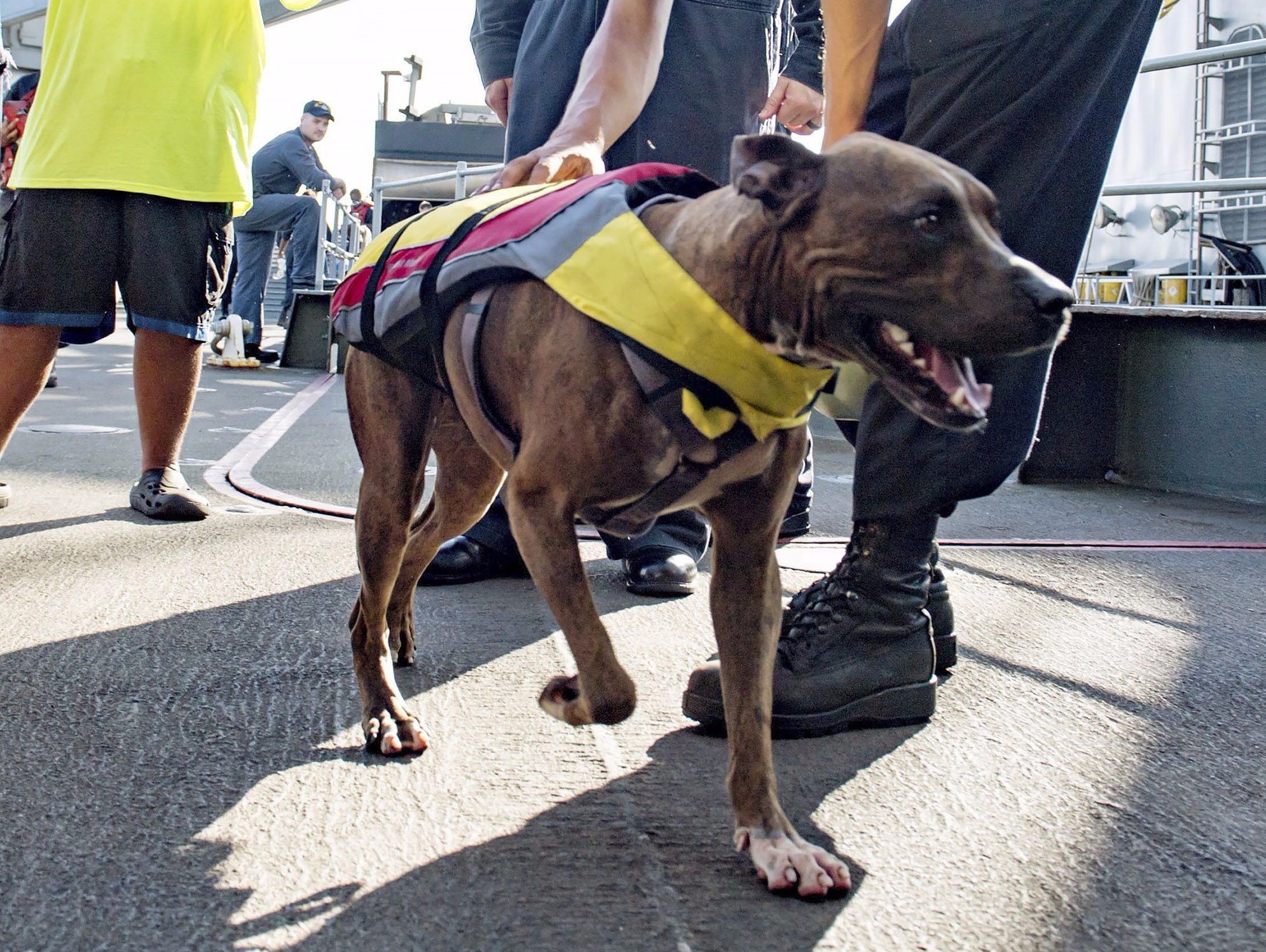
Take another look at these women.

These are not women who are struggling to survive. They have not been dehydrated, or even operating at a caloric deficit, for five months.
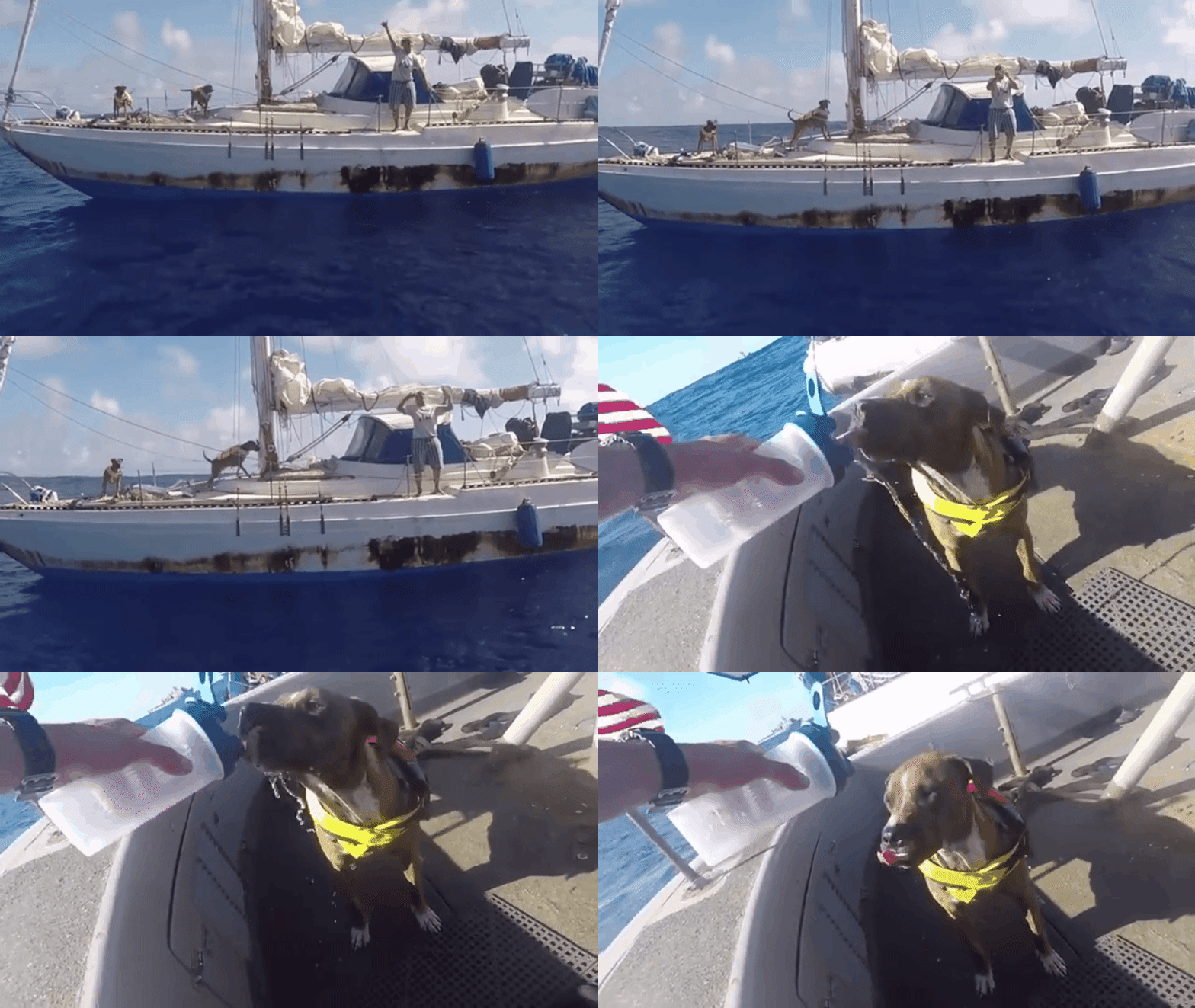
They are healthy enough to stand up and blow kisses at their rescuers, and the dog still has visible, healthy muscle tone.

They are healthy enough to climb long ladders unassisted while smiling enthusiastically.
Do you see my point? These women and their dogs aren’t starving. They’re not close. They’re not even skinny. They have visible subcutaneous fat. Their faces are plump, not sunken and emaciated. Their skin isn’t burned, their lips aren’t chapped, there is no indication whatsoever that they’ve been through any kind of hardship. The dogs have shiny coats and strong muscles.
For contrast, I present Maurice and Maralyn Bailey.

In 1973, their boat was sunk by a whale in the Pacific. They collected seawater and ate birds, fish, and turtles. They were out for 117 days (less than four months) before being rescued, and they each lost forty pounds. They look like Holocaust survivors. Jennifer Appel and Taisha Fuiva haven’t lost an ounce.
4. The Storm
Let’s backtrack to how they got stranded in the first place. They left Hawaii on May 3, and hit trouble right away. Appel claims they hit a storm with “force 11” winds on their first night.
“Force 11” is a reference to the Beaufort Scale, a somewhat archaic but still widely used scale of wind strength that goes from 1-12. 12 is a hurricane, 11 is 64-72 mph winds. Think about putting your hand out the window on the highway and you’ll know how scary that might be. The thing is, they say this happened on the first night. If they left at dawn on May 3, that means they’re at most 18 hours from Hawaii, or about 90 miles. And the highest wind speed that Hawaii experienced that entire week was under 30 mph. And that weather data is from Bradshaw Air Field, way up on Mauna Kea, so it’s not sheltered at all. Is it completely impossible that they were experiencing 70 mph winds less than 100 miles from the island? No. But it is profoundly unlikely.
Apparently, that storm rendered the sails unusable. Some reporters said that the mast “broke,” which it clearly didn’t, but I’ll let that slide as ignorant reporting. Pictures of the boat are a little suspicious, though.
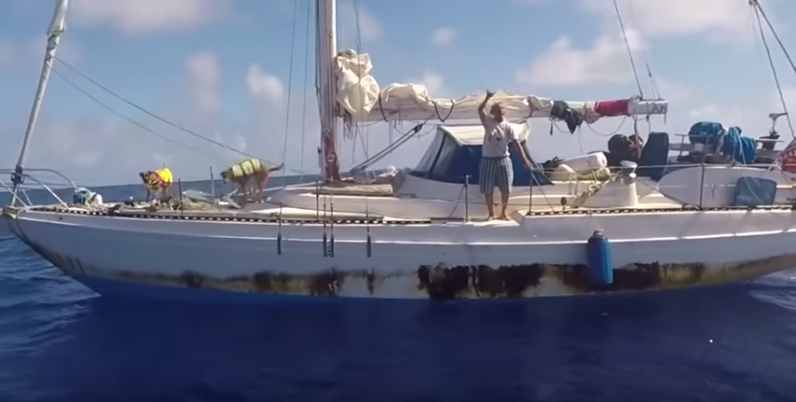
The mast is still upright, and the forestay, backstay, and shrouds (wires that hold the mast up) are still intact. The boom is still attached. The mainsail is down and, though sloppily folded, isn’t obviously damaged. The jib is neatly rolled, and both sheets are still attached. There is absolutely no indication that this boat isn’t capable of moving under its own power. I know I’m not on the boat and I haven’t examined it myself, but I’ve seen booms break. I’ve seen masts break. I’ve seen sails blow out. It is shockingly violent, and you are absolutely not able to put the sails away afterward in the way that these sails have been stowed.
[EDIT 11/1/17: one source mentions a damaged spreader, a structural component of the mast that I can’t assess from the photos. A damaged spreader might have prevented them from running at full sail in strong winds, but would not have immobilized the boat by any means. If the jib was intact, and it certainly seems to be, any competent sailor could have gotten the boat moving.]
Around May 30, Appel says they hit a second storm. Now, at this point, it’s been 27 days since they left. They should be there by now. To make the trip in 27 days requires a pace of only 96 miles a day. That is, by any boat’s standards, a snail’s pace. It’s an average speed of four knots, and that’s how long it would take to cover the entire distance to Tahiti. So where the fuck are they on May 30? Granted, you can only expect about 500 miles of range out of a marine motor, but if your sails are rendered unusable on May 3, you’re still 2500 miles from Tahiti, you’re only 90 miles from Hawaii, and you have to know your engine won’t get you to Tahiti, why wouldn’t you turn back?
Grudgingly, let’s move past that. Let’s assume they’re barely crawling south, under engine power only, knowing full well the engine can’t take them that far, and they’re somewhere in this region.
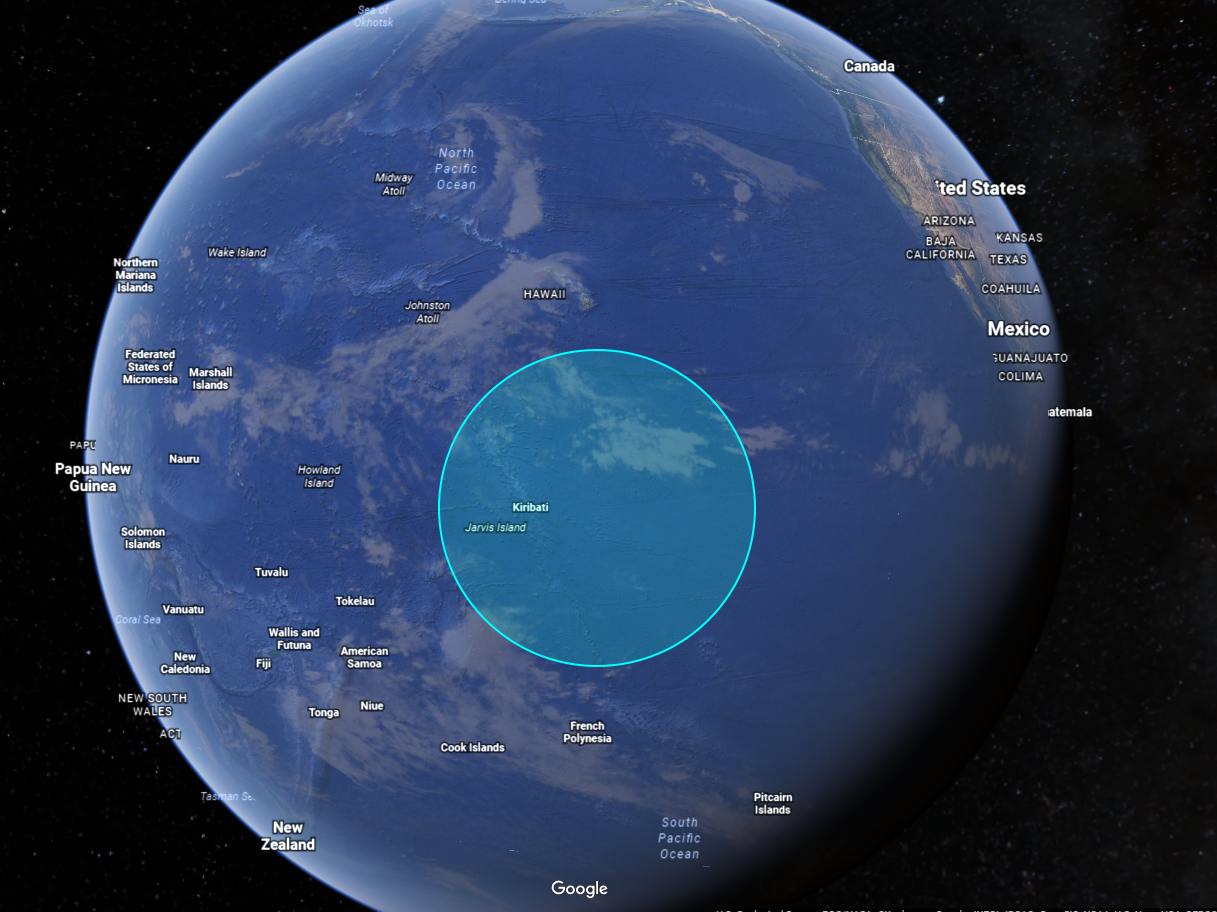
“we had no way to realize that we were about to enter a typhoon that had winds of 100 to 150 miles an hour and minimum wave heights of 40-foot height.”
Nope. Bullshit. Absolute bullshit. There is no fucking way that this is what happened. Firstly, look back at the boat. That mainsail is stowed very sloppily. It’s not folded right or lashed down properly. There’s no sail cover, for which I can think of no justification. It has many folds and loose parts for the winds to catch. 100-mph winds would have shredded that like a cat shreds toilet paper.

Same goes for that canvas awning over the cockpit. That awning is probably 3’x4′ at the end, so using the formula F = 1/2(rho)*v^2*A*C for wind load, the awning is experiencing at least 4500 pounds of pressure on it. If the wind is dead on, it’s closer to 9000. There is simply no chance in hell that that boat, as it looks there, has been through 100+mph winds.
But don’t take my word for it. Turns out we keep track of these things. Let’s assume that despite their broken sails, they were still motoring south toward Tahiti. They’ve explicitly said that they decided not to turn back. There were only four hurricanes in the Pacific this year with winds in the Cat 3 or Cat 4 range like Appel describes, and SURPRISE, none of them happened until mid-July.
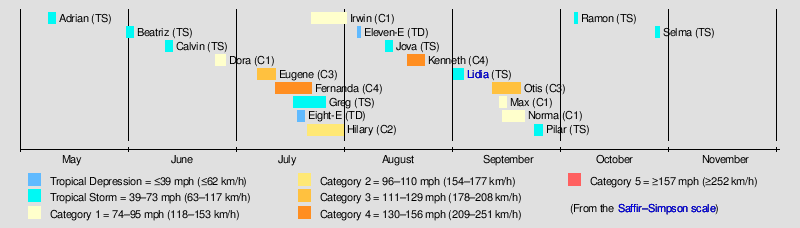
Also, none of them were within a thousand miles of this boat, but does that even matter at this point?
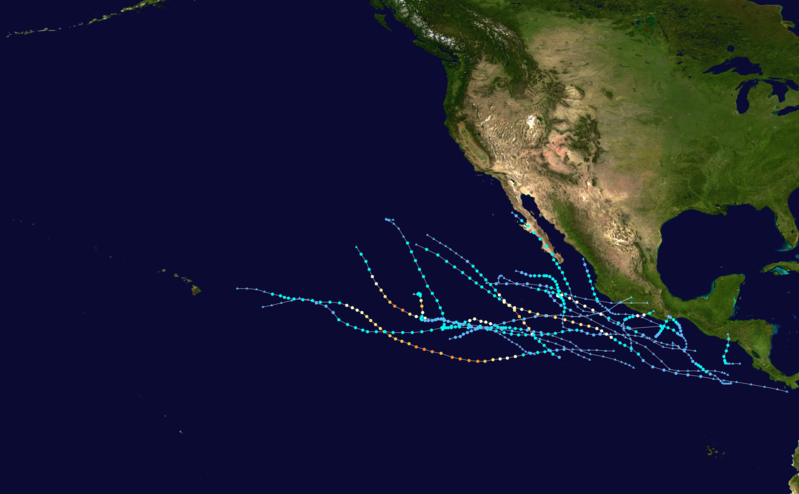
So let’s recap. They left Hawaii on May 3. That night, they claim to have experienced Force 11 (~70mph) winds. That almost certainly didn’t happen. They claim that this storm rendered their sails unusable, which also almost certainly didn’t happen. Rather than turning back and limping home to Hawaii in less than a day on motor power alone like any sane sailor would have — and remember, Appel claims to have decades of sailing experience — they decided to press on, hoping for … what? The motor would have crapped out less than halfway there. The sails were unusable (again, I don’t believe them, but that’s what they say). There was absolutely no hope of getting where they needed to go, but they say they kept going for 27 days.
What were they doing for 27 days? God knows. They weren’t motoring. The motor in a boat like that is good for maybe 200 hours on a tank. Call it 10 days of barely puttering along. And then what? Two weeks of drifting? And only then, on May 30, 27 days after the first storm and 17 days after running out of fuel, the second storm of 100+ mph winds hit. That definitely didn’t happen, as evidenced by the boat itself and all of the weather data that we keep on big storms. Apparently, that storm “flooded” the motor, rendering it unusable. Only then, according to their story, were they truly stranded. But the motor couldn’t possibly have been functioning that long anyway, so what does it matter if it broke? None of this makes sense. But I’m not done yet.
5. Communication
Let’s talk about how one would signal for help in a situation like this. Several stories talk about how their cell phone fell overboard, but that’s completely irrelevant because it would have been useless a few hours into the trip so I’ll ignore it. From the same CNN video:
“We had no VHF — no range on it — no weather comm, no SSB, we didn’t have our HAM radio, and our radio telephone inside the boat was not working, also our Iridium sat phone was not working”
Let’s break those down.
VHF

Stands for Very High Frequency radio, and is probably the most common radio used in the boating world for everything from day-to-day communication to emergencies. It’s basically line-of-sight though, so they weren’t close enough to use it. That checks out.
“Weather comm”
No idea what this means. You get weather reports on the open ocean via some other form of radio, not a separate piece of hardware, so I’m not sure what she means here.
SSB
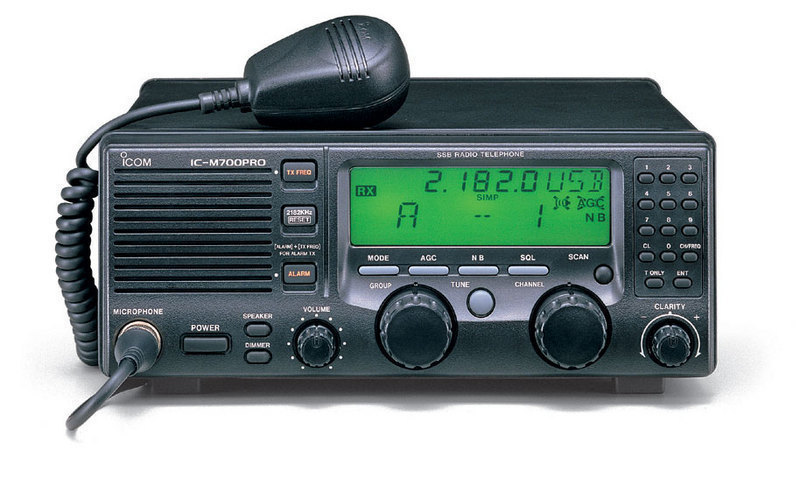
Stands for Single Side Band radio, and is also extremely common for open-water sailors. If you’re ever out of sight of land, you probably have one of these. It bounces signals off of the ionosphere, meaning it can transmit past the curvature of the earth. Theoretically, it has a range of thousands of miles. That’s how you’d normally get weather reports out in the middle of nowhere. Apparently it was broken.
Ham
Ham radio really just means amateur radio. It covers a broader array of wavelengths than SSB, though in a marine context those won’t have the range either. In practical terms, ham radio and marine SSB are the same thing.
[EDIT 11/1/17: The reason I say that ham and marine SSB are the same thing is that on the open ocean, they’re both using SSB frequencies, so it wouldn’t make sense to have two separate pieces of hardware. You could, though.]
Same frequency band, same hardware. The only difference is who you’re allowed to talk to and what licensing you need. It makes no sense at all to say that both of them were broken, since they wouldn’t be two separate radios in the first place.
“Radio telephone”
Radio telephone is more of a system than a piece of hardware. It’s also known as ship-to-shore, and it’s pretty much obsolete. Basically you radio to a shore station, and the shore station operator calls someone on the phone and holds the phone up to the radio. It’s slightly more sophisticated than that, but not much. It also uses SSB frequencies. You can get ones that look like a walkie-talkie, but more likely you’d just use your onboard SSB. In any case, this was apparently also broken.
Iridium sat phone
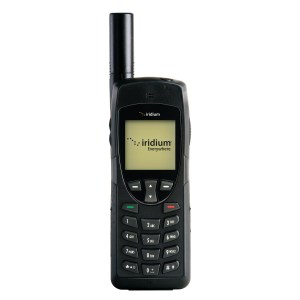
Iridium is a brand of satellite phone. It should theoretically work anywhere in the world except underground, but it also apparently wasn’t working. Maybe it was out of battery.
The last resort, if all of these fail and you can’t get help, is called an EPIRB. EPIRB stands for Emergency Position-Indicating Radio Beacon, and is hooked to a global network of GPS satellites. It looks like an really big walkie-talkie, usually with only one switch on it (“on”), and sometimes comes with other shit like a strobe light, orange dye, etc. It is utterly bombproof, waterproof, and foolproof. Some of them are even water-activated, so if you sink, it starts automatically.
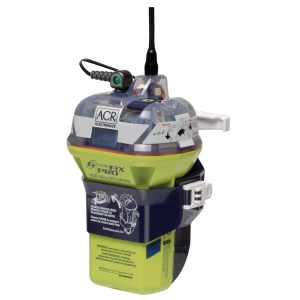
When the nuclear holocaust happens and everything is ash, there will still be EPIRBs blinking away somewhere.
When an EPIRB turns on, it sends a signal to its satellite network. If you’re within 5000 miles of the Equator (70% of the Earth), it’ll be in range. It might take up to 45 minutes to lock on to a signal, and then another three minutes to alert emergency services. At that point, since you have to register an EPIRB to buy it, it’ll tell them not only where you are, but who you are and what kind of boat you have. It’s accurate to within 50 yards, updates every 20 minutes, and runs for 48 hours. After the EPIRB was activated, a Coast Guard plane from Hawaii could have reached this boat in six hours.
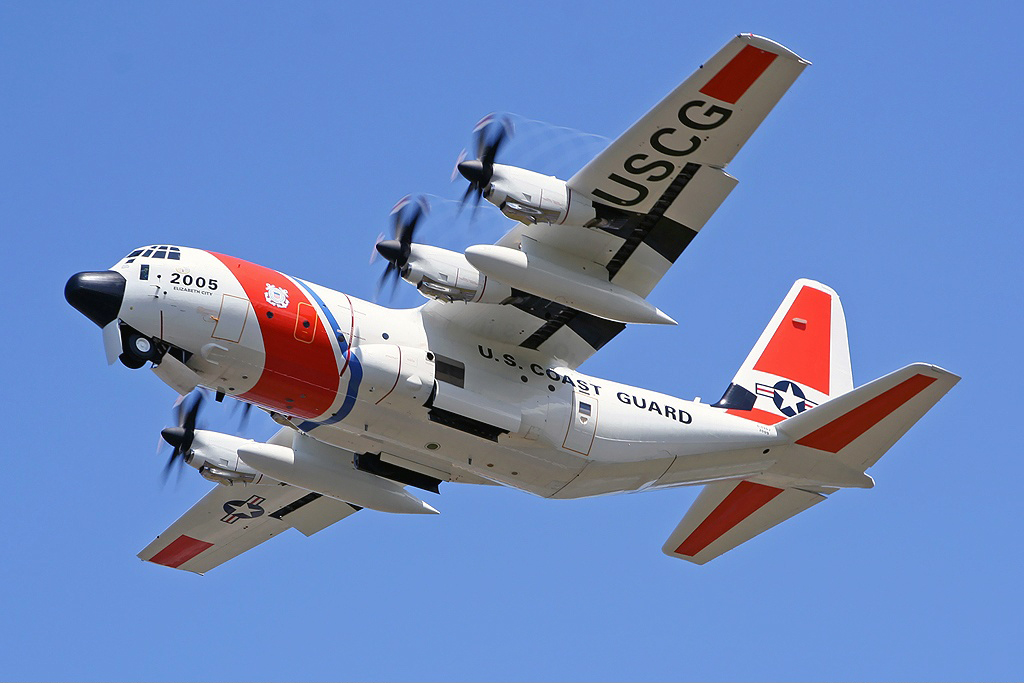
The Navy could have been there in two days. So what about Appel’s EPIRB?
She didn’t even fucking turn it on.
Jennifer Appel confirmed in an interview Tuesday that they had the beacon and did not use it. She said that in her experience, it should be used only when you are in imminent physical danger and going to die in the next 24 hours.
“Our hull was solid, we were floating, we had food, we had water, and we had limited maneuverable capacity,” Appel said in Japan, where the U.S. Navy took them after they were rescued by a Navy ship. “All those things did not say we are going to die. All that said, it’s going to take us a whole lot longer to get where we’re going.”
No, woman, that is not how that works. You do not wait until you are hours from death to turn on the EPIRB, because it will probably take longer than that to get rescued. If you are stranded, you turn on the fucking beacon. If your sails and motor are broken, you turn on the fucking beacon. If you’re running out of food, you turn on the fucking beacon. And if, as you say in this video, you “honestly didn’t believe that we would survive another 24 hours,” you TURN ON YOUR FUCKING BEACON.
Philip R. Johnson, a retired Coast Guard officer, weighed in on their situation as well.
If the thing was operational and it was turned on, a signal should have been received very, very quickly that this vessel was in distress,” Phillip R. Johnson said Monday in a telephone interview from Washington state.
Appel and Fuiava also said they had six forms of communication that all failed to work.
“There’s something wrong there,” Johnson said. “I’ve never heard of all that stuff going out at the same time.”
The absolute worst case scenario, even if the month of May went as badly as they say it did (which is impossible), is that they turn on their EPIRB after the hurricane (that didn’t exist) hit them on May 30 (which it didn’t), and they’re home before Mother’s Day. There is absolutely no reason for their summer to have unfolded as it did. As the Denver Post put it, “Key elements of the women’s account are contradicted by authorities, and are not consistent with weather reports or basic geography of the Pacific Ocean.”
6. The Sharks
I know we’re 3500 words deep at this point, but we’re going to have to take a second to talk about the sharks.

Repeatedly, Appel mentions being in “a tiger shark location.” The phrase “shark-infested” has been thrown around. Tiger sharks are coastal animals, but you know what? I’ll grant that maybe there were sharks out there. That’s when it gets ridiculous.
“We were slowly maneuvering through their living room. They came by to slap their tails and tell us we needed to move along. They decided to use our vessel to teach their children how to hunt. They attacked at night. We were just incredibly lucky that our hull was strong enough to withstand the onslaught.”
“I’m telling you I’ve never seen any Stanley Cup winner come even close to the precision these five sharks had. Three would get on one side and two would get on the other side, and they would make waves and try to knock down the boat.”
“I told [the dogs] not to bark because the sharks could hear us breathing. They could smell us”
This is such utter and complete nonsense that I hardly know where to begin, so I’ll just do bullet points.
- Tiger sharks are solitary.
- Very few sharks hunt in packs. Tiger sharks are not among them (sand tiger sharks aren’t the same thing).
- Sharks occasionally ram boats, but the chances of it breaching the hull are zero. Here is a much bigger shark ramming a much smaller boat and it still can’t overturn it. A 50-foot boat like that probably weighs 20 tons, and a big tiger shark weighs maybe half a ton. Plus, sharks only have cartilage, not bones. There’s no big, hard surface like a whale’s head to bash into stuff.
- Sharks don’t teach their children how to hunt. They lay eggs and leave.
[EDIT 10/31/17: Tiger sharks are one of the shark species that give live birth. The teaching thing stands.]
- Sharks ABSOLUTELY do not coordinate to make waves to knock boats over. You are thinking of killer whales, which have nothing in common with tiger sharks except living in the ocean. This would require the ability to make waves, the coordination to make one big wave, some concept of how boats work, and sophisticated enough communication to organize the whole thing. Sharks have none of those things.
- EVEN IF THEY DID, you just told us that your boat survived three days of 50-foot waves (it didn’t) and 100-mph winds (also no) and you think the sharks can top that? Even a pod of half a dozen orca can only muster about a 3-foot wave, and they’re about five times the size of tiger sharks.
- Sharks can’t hear you breathing.
- Sharks can’t smell you through a fucking boat, you fucking shitweasel.
I feel like I’m taking crazy pills.
Conclusion
Here’s what we know: Two women left Hawaii on a boat on May 3. Five months later, they were picked up 900 miles south of Japan.
They claim to have been hammered by multiple hurricane-force storms. That absolutely didn’t happen.
They claim to have been attacked by sharks. That absolutely didn’t happen.
They claim that their boat was rendered immobile. It absolutely wasn’t.
They claim that they packed a year’s worth of food, but that they somehow went through 90% of it.
They claim that all of their communications devices failed.
They admit to not turning on a distress beacon.
So what happened? Here’s my guess. Two women bought a shitload of food and put in on a boat, then sailed it a hundred miles off the coast of Hawaii and turned the motor off. They mussed up the sail a little bit (or just suck at stowing it in the first place), and just sat there, waiting for the trade winds and Equatorial Current to take them west, content in the knowledge that the boat wouldn’t sink and they wouldn’t run out of food until they reached Japan, if it came to that. When they finally made contact with a boat, they invented the sharks, the storms, the technical failures, the hardships, etc. They’re expecting publicity (mission accomplished) and maybe a book deal. Maybe a TV special. Maybe an episode of “I Shouldn’t Be Alive.” Hell, maybe a movie. They’re attention whores.
Luckily, I’m not the only person noticing the problems here. Multiple outlets are reporting that they never turned on their EPIRB. More are reporting inconsistencies with weather and timing. Their story is falling apart only days after it landed, partly because they can’t even keep it straight themselves. You’d think with five months of nothing to do, they could have at least invented a better narrative, but I guess not. They’re on their way to being exposed, as I hope they are. Fuck ’em.
Bonus tidbits
I’ve been obsessing over this story for days, and I keep turning up more shit. It’s an endless treasure trove of lies. Here’s a few I decided to leave out.
- Appel claims that they couldn’t turn back to Hawaii after the first (made-up) storm because there were no harbors deep enough for a boat the size of theirs. Ignoring the fact that they had just left Hawaii, the islands are also home to several enormous marinas, a Coast Guard base, and PEARL FUCKING HARBOR. If it can hold the Navy, it can hold your 50-footer.
- They say that their tech was all broken before May 30, which is why they didn’t see the storm coming, but then they say they sent out distress calls for five months. On what?
- They say a “white squall” flooded the engine. A white squall is a sudden burst of wind out at sea that whips up the waves and makes whitecaps. It is not accompanied by rain. That’s called a black squall, named for the dark clouds that come with it. Anyone with the experience Appel claims to have should know better.
- She says the squall “dropped copious amounts of water and it flooded the cockpit, which actually ended up flooding the ignition and the starter for the boat.” Believe it or not, the cockpit does not actually drain directly into vital engine components, in the same way that the gutters on your roof do not drain on to your home theater. Also, boat ignition systems are waterproof since, you know, they’re on boats.
- The engine is below decks. It is not open to the outdoors. If there’s enough water in the engine bay to disable it, the boat is probably well on its way to sinking.
- Appel says “we got pushed into what’s called the Devil’s Triangle, where boats go in, but they very rarely come out. And if they do, there are no people on them.” Firstly, the Devil’s Triangle is another name for the Bermuda Triangle, which is in a different ocean. Secondly, the legends of the Bermuda Triangle are completely unsubstantiated, like alien abductions or Bigfoot sightings. It’s possible that she was referring to the Devil’s Sea or Dragon’s Triangle, different names for a similarly myth-shrouded area of the Pacific. Except they weren’t in that part of the ocean. And besides, there is no magic area of the Pacific with skeleton-filled ships floating in limbo forever.
- Appel says she took two years planning this trip. It doesn’t take two years to plan one month on a boat. You fill up the fuel tank, take one day to go to the grocery store, check all the vital systems (like maybe your SIX FUCKING RADIOS), and head out. One week of prep, as long as the boat doesn’t need major maintenance.
- Appel describes telling Fuiava about the trip as follows: “When I asked Natasha, I told her I have no idea what’s going to happen out there and she said, ‘That’s OK, I’ve never sailed.’” That is super not ok. One person cannot operate a 50-foot boat for three hours without help, let alone three weeks. Two people are already stretched thin, given that someone has to be awake 24/7 to keep watch, and that’s if they both know what they’re doing. I wouldn’t dare do this trip with two people. No experienced sailor would set off on a trip like this with a useless copilot they’d just met, and no sane human being would agree to a three-week boat trip with a stranger who says they have no idea what to expect.
- Also, why didn’t you have any idea what was going to happen out there?! I’ve personally sailed a very similar voyage from the Galapagos to French Polynesia. It took 23 days, at the same time of year, in the same trade winds and currents, and I’ll tell you what happens out there. NOTHING. It is boring as shit. The winds don’t change. The temperature is balmy. The sea stretches in every direction. You adjust the sails once a week. You watch for big ships (there aren’t any). You catch some fish. You read a lot of books. One of the most exciting moments is when the ETA on your GPS blinks over from –:– to 99:59, and then you still have four days left. It is an exceedingly uneventful way to pass the time.
- They claim that they were able to get their crippled boat, without sails, to cover the 1000 miles to Christmas Island, part of the island nation of Kiribati, but didn’t try to land because “It is uninhabited. They only have habitation on the northwest corner and their reef was too shallow for us to cross in order to get into the lagoon.” Christmas Island is home to 2,000 people and regularly hosts much larger ships.

- When asked if the small island would have been a good place to land and repair their sails, Appel said no. “Kiribati, um, one whole half of the island is called shipwreck beach for a reason.” It’s not. It’s called Bay of Wrecks, it’s a small area on the east side, and the REST OF THE ISLAND is fine.
- Instead of stopping in Kiribati, they decided they “could make it to the next spot,” which, in their mind, was the Cook Islands. The Cook Islands are 1600 miles from Kiribati, too far to go by motor alone even if the motor hadn’t failed, and past the original destination of Tahiti. That, apparently, was a better option than just going to the OTHER FUCKING SIDE of Kiribati, if they were even at Kiribati, which I doubt.
- The Coast Guard made radio contact with a vessel that identified itself as the Sea Nymph near Tahiti in June, well after the alleged boat-crippling storms, and the captain said they were not in distress and expected to make land the next morning. Either it was a different Sea Nymph (plausible) or they somehow managed to fuck that up and ended up 5,000 miles west of there instead.
More Bonus Tidbits (as of 11/1)
It’s only been 24 hours since I posted this and more shit keeps coming up.
- They have doubled down on their claim that they encountered 30-foot waves and hurricane-force winds on the night they left, despite no evidence that any such storm existed. Even very generously assuming that they mean 30-foot swell — caused by large scale wind and weather — and not 30-foot waves — caused by the storm you’re in right at that moment — doesn’t account for the lack of evidence of the wind.
- “We got into a Force 11 storm, and it lasted for two nights and three days,” Appel said Tuesday.” No, you didn’t. Any storm that strong and that long would have showed up on radar, which is live 24 hours a day and updated every three hours. The storm didn’t exist. This is as clear-cut a lie as there could be. It’s like lying about what time it is.
- Appel’s mother told the AP that she called the Coast Guard to report Jennifer missing about a week and a half into their trip. Not only is that too early to report someone missing if they’re supposed to be on a 3-week trip, but the Coast Guard say they never got such a call. They received a call from a “family friend” they identified as a male on May 19, still several days before the women expected to arrive.
- The women said they filed a float plan listing their course and other details with some friends and relatives. In an interview with the Coast Guard, the women said they had filed no float plan. You don’t have to file a float plan. It’s not like a flight plan. But in general, it’s a good idea to tell people, “if you don’t hear from me in a month, tell the Coast Guard.”

- MORE MAGIC SHARK MADNESS. Apparently they claim the tiger sharks were 20-30 feet long. They don’t get that big. Also, according to CBS, “University of Hawaii professor and veteran shark researcher Kim Holland has never heard of any kind of shark repeatedly attacking a boat hull throughout a night. He also said tiger sharks never jump out of the water and do not make coordinated attacks.”
- They’re now saying that they contacted someone on Wake Island, after previously saying that they weren’t ever able to contact anyone. They didn’t land on Wake Island, though, because they weren’t able to navigate the two-ish miles to the other side of the island to land. So no one could come out and tow them in? No one on Wake Island reported an adrift vessel? Wake Island has about 100 members of the Air Force on it at any given time and a substantial airstrip, there’s no reason a rescue couldn’t have been mounted from there.
- They’ve changed their story about the fishing vessel that originally contacted them. Originally they said they were kind, but now report that they feared for their safety. They claim that the fishing boat damaged their boat, and then Appel said, “I also believe that they knew they were damaging the boat. And if we couldn’t get additional help, that boat would sink, and they would get … two girls to do whatever they wanted to.”
- In one account, they said that Fuiava had to swim to the fishing boat to tell them to stop damaging the boat while towing it. Not only is it ludicrously impossible that a swimming person could catch a boat in motion, but it’s also not especially plausible that towing a boat would cause it damage. And if it were, they could have just cut the rope and TURNED ON THEIR FUCKING BEACON.
- The captain of the fishing vessel says he saw someone waving a flag on a boat about a mile from him. When he went over, they asked to use his sat phone, and for him to tow them to Midway Island, which is almost 2000 miles from where they were. He towed them overnight, at which point they asked to be turned loose and called the Navy instead. He also says he offered them water and food, which they declined.
- Mike Michelwait, owner of the Honolulu Sailing Company, says he’s made the trip from Hawaii to Tahiti several times, but wouldn’t try it with only two people. “There’s only two of them on board, and it’s a 50-foot boat,” he said. “That’s a lot of boat to handle.”
Even More Bonus Tidbits (as of 11/2)
I can’t help myself.
- Fuiava claims to have lost 70 pounds during the trip, despite having a year’s worth of food, despite almost running out of food in five months. And if that clusterfuck wasn’t enough, her clothes still fit fine.
- That line of green shit on the boat is majorly suspicious.
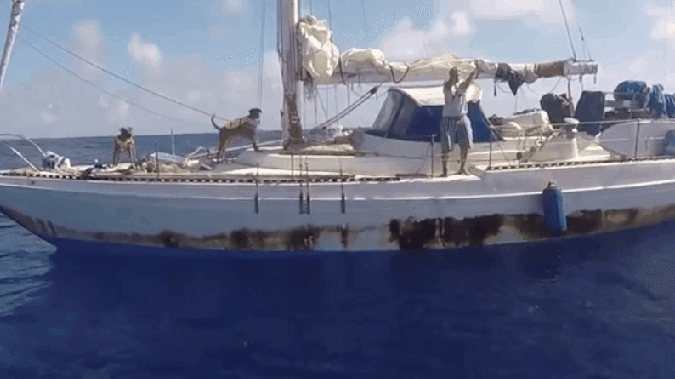
Normally, you’re supposed to clean your bottom paint every 2-4 months, depending on where your boat is (green scum grows faster in warm water). You’re also supposed to paint the boat’s waterline (the barrier between white and blue, in this case) roughly where the water sits when the boat is in the water. You can see in the screenshot that that’s the case. The blue is relatively clean because it’s what’s called “bottom paint,” which is engineered to repel algae/barnacle/mussel growth. The white isn’t supposed to be underwater at all. But the green stuff only grows under prolonged submersion, so what’s it doing so high on the white?
Glad you asked. Green scum up that high on the boat indicates that the boat was sitting much lower in the water than it was when they got picked up, and for a long time. For perspective, this couple writes about getting rid of 1200 pounds of stuff and rising two inches in the water, and that’s on a (relatively very light) 5-ton catamaran. Shedding weight will have more impact the lighter the boat is. A 50-foot sloop like the Sea Nymph probably weighs more like 20 tons, and that’s before the 5-6 tons of extra fiberglass and keel that Appel claims to have added on. All the food and water they went through in five months can’t come close to accounting for what looks like two feet of waterline difference. That boat looks to have been seriously weighed down for a very long time.
I don’t know what the fuck happened. But I do know these women are full of shit.







 UNREASONABLY DANGEROUS ONION RINGS
Leave a reply to rahsaanabdul Cancel reply